








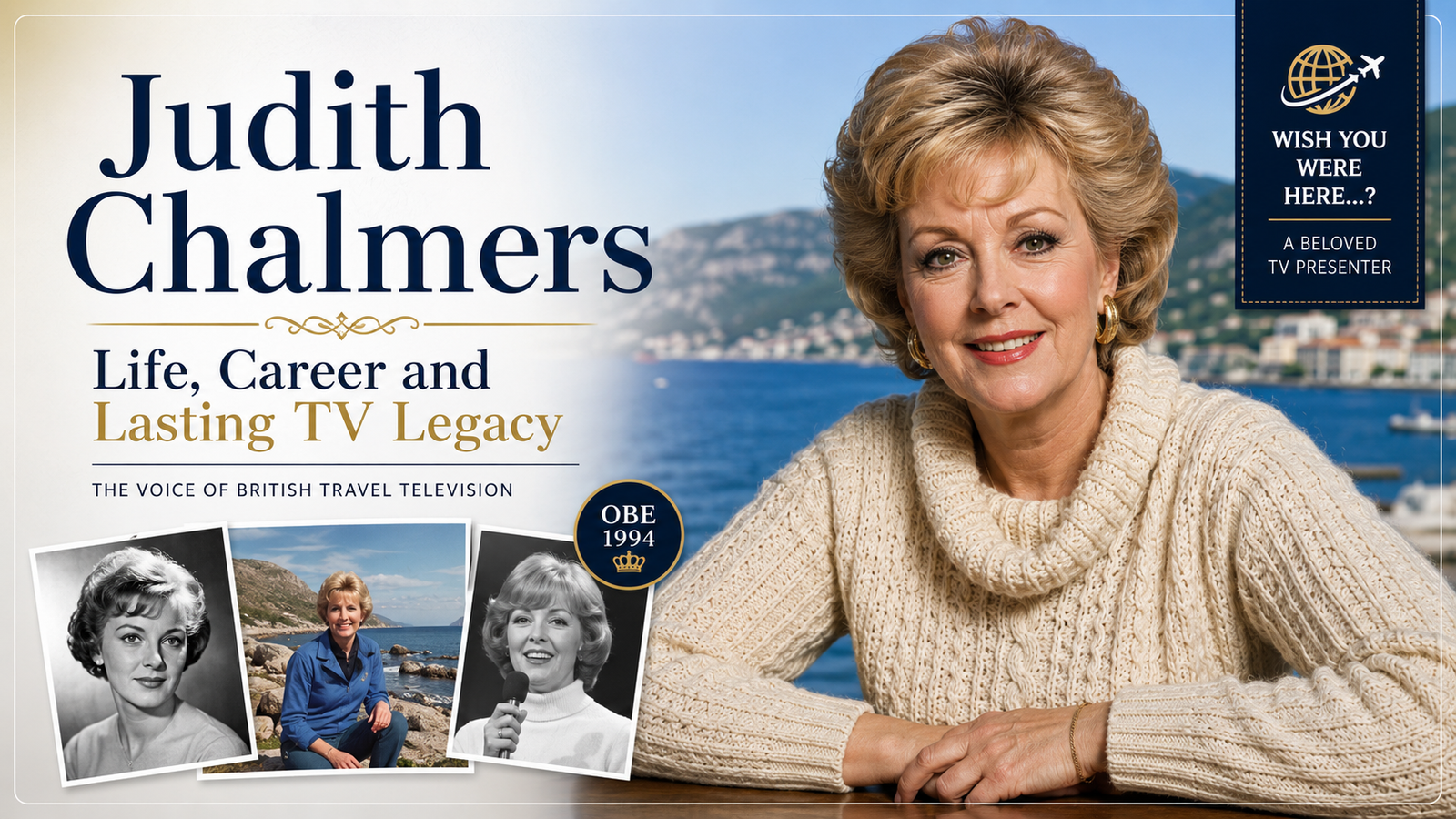
Who Was Judith Chalmers?
Judith Chalmers was a British broadcaster and television presenter whose career stretched across more than six decades. She became especially famous for presenting ITV’s long-running travel programme Wish You Were Here…?, a show that introduced millions of viewers to holiday destinations around the world.
She was known for her polished delivery, friendly manner and ability to make travel television feel both informative and enjoyable. At a time when many British families were beginning to explore overseas holidays more confidently, Judith Chalmers became a trusted guide.
Her career was not limited to travel. She worked in radio, children’s programming, live television, daytime shows, entertainment formats and major televised events. This range made her one of the most versatile British presenters of her generation.
Judith Chalmers died in May 2026 at the age of 90, leaving behind a long and respected broadcasting legacy.
Early Life and First Steps in Broadcasting
Judith Chalmers was born in 1935 and grew up in the Cheshire and Greater Manchester area. Her early life gave little indication that she would eventually become one of Britain’s best-known television personalities, but she entered broadcasting remarkably young.
Her first major step came through the BBC. As a teenager, she appeared on radio, gaining experience at a time when broadcasting was far more formal and tightly controlled than it is today. This early exposure helped her develop the clear voice, composure and confidence that later became central to her presenting style.
Why Was Her Early Start Important?
Starting young gave Judith Chalmers several advantages:
- She became comfortable with live broadcasting.
- She learnt how to communicate clearly to a wide audience.
- She developed professionalism before television became a dominant household medium.
- She gained experience in both radio and television.
This foundation helped her move naturally into different presenting roles as British broadcasting expanded during the 1950s, 1960s and 1970s.
How Judith Chalmers Built Her Television Career
Judith Chalmers’ television career developed gradually rather than overnight. She became part of a generation of broadcasters who were expected to be calm, articulate and reliable on screen.
In the early stages of her career, she worked as a BBC television announcer. This role required accuracy, timing and the ability to speak directly to viewers with confidence. It may sound simple today, but television announcing was a major public-facing job at the time.
From there, she moved into presenting. She worked on shows connected with entertainment, lifestyle, discussion and public interest. Her ability to handle different formats made her valuable to broadcasters.
Key Qualities That Helped Her Succeed
Judith Chalmers stood out because she had:
- A clear and confident voice
Her delivery was easy to understand and suited both radio and television. - A warm screen presence
She appeared friendly without seeming forced or over-rehearsed. - Professional discipline
She worked in live and recorded broadcasting, where mistakes had to be handled calmly. - Versatility
She could present travel, entertainment, lifestyle and radio programmes. - Viewer trust
Audiences believed her because she sounded informed, balanced and sincere.
These qualities helped her move from general broadcasting into the role that would define her public image.
Judith Chalmers and Wish You Were Here…?
For many people, Judith Chalmers is inseparable from Wish You Were Here…? The ITV travel show began in the 1970s and became one of the most recognisable British holiday programmes.
Judith Chalmers started presenting the show in 1974 and remained closely associated with it for nearly three decades. During that time, she visited destinations across the world and helped viewers understand what different holidays might offer.
What Made Wish You Were Here…? Special?
Before online booking platforms and customer review websites, travel television had real influence. Viewers watched programmes like Wish You Were Here…? to learn about hotels, resorts, beaches, city breaks and package holidays.
The programme offered:
- Destination guides
- Holiday ideas
- Hotel and resort features
- Practical travel information
- A sense of escapism for viewers at home
Judith Chalmers helped make the show feel trustworthy. She was not just presenting attractive locations; she was helping viewers imagine whether those places were right for them.
Why Did Her Role Matter?
Her role mattered because she combined aspiration with reassurance. She made faraway destinations look exciting, but she also presented them in a way that felt safe, organised and understandable.
This was especially important during a period when more British families were considering holidays abroad. For many viewers, she became the face of confident, mainstream travel.
Why Was Judith Chalmers So Popular?
Judith Chalmers became popular because she connected with viewers in a natural way. She was glamorous enough to suit travel television, but not distant or intimidating. She seemed professional, cheerful and dependable.
Her appeal came from balance. She could describe a beautiful beach or resort without sounding exaggerated. She could introduce a destination without making it feel like a sales pitch. She gave viewers a sense that they were receiving useful information, not just entertainment.
Main Reasons Viewers Remember Her
- She had a warm and recognisable presenting style.
- She became strongly associated with holiday television.
- She represented a trusted era of British broadcasting.
- She made international travel feel accessible.
- She stayed on screen long enough to become part of family viewing culture.
In modern terms, Judith Chalmers had what many presenters and creators now try to build: a trusted personal brand.
Career Highlights Beyond Travel Television
Although Wish You Were Here…? became her most famous work, Judith Chalmers’ career was much broader.
She presented BBC radio programmes, including well-known formats such as Woman’s Hour and Family Favourites. She also worked on television programmes such as Come Dancing and ITV daytime shows.
Her broadcasting career included entertainment, lifestyle, interviews, travel and public-facing presentation. This variety shows how adaptable she was.
Notable Areas of Work
| Area | Judith Chalmers’ Contribution |
|---|---|
| Radio | Presented and contributed to major BBC radio programmes |
| Television announcing | Worked as a BBC announcer during an important period in TV history |
| Travel television | Became the defining presenter of Wish You Were Here…? |
| Daytime television | Hosted magazine-style programmes and interviews |
| Entertainment | Presented major events and popular TV formats |
| Later appearances | Returned occasionally for interviews and nostalgic TV features |
This wide range made her more than a travel presenter. She was a full broadcasting professional with a career that crossed several eras of British media.
Judith Chalmers’ Family Life
Judith Chalmers was married to Neil Durden-Smith, a sports presenter and commentator. Their marriage lasted for many decades, and they became one of the familiar broadcasting families in British public life.
They had two children, including Mark Durden-Smith, who also became a television presenter. Mark later appeared in travel-related programming connected with the legacy of Wish You Were Here…?
Her family life was often mentioned with warmth in tributes, particularly because she balanced a demanding broadcasting career with her role as a wife, mother and grandmother.
A Broadcasting Family
The Chalmers and Durden-Smith family connection to television is notable because it shows how media work continued across generations. Judith Chalmers built her career in a more formal age of broadcasting, while her son worked in a later television era with different styles, formats and audience expectations.
Awards, Recognition and Public Legacy
Judith Chalmers received official recognition for her contribution to broadcasting. In 1994, she was appointed an Officer of the Order of the British Empire, commonly known as an OBE.
This honour reflected her long service to television and radio. It also recognised the cultural impact she had as a presenter who became a household name.
Why Her Legacy Still Matters
Judith Chalmers’ legacy matters for several reasons:
- She helped define British travel television.
- She showed how a presenter could build trust over decades.
- She represented professionalism in live and recorded broadcasting.
- She influenced how viewers imagined holidays and overseas travel.
- She remains strongly associated with a memorable period of UK television.
Her legacy is not simply about nostalgia. It is also about the value of clear communication, audience trust and long-term credibility.
Judith Chalmers Compared with Modern Travel Presenters
Travel media has changed dramatically since Judith Chalmers became famous. Today, people discover destinations through YouTube, Instagram, TikTok, blogs, booking websites and online reviews. Yet her presenting style still offers useful lessons.
| Feature | Judith Chalmers’ Era | Modern Travel Media |
|---|---|---|
| Main platform | Television | Social media, streaming, blogs and TV |
| Audience behaviour | Families watched scheduled programmes | Users search and scroll on demand |
| Style | Polished, calm and structured | Fast, personal and often informal |
| Trust factor | Built through repeated TV appearances | Built through transparency, reviews and personality |
| Travel advice | Curated by broadcasters | Created by influencers, journalists and travellers |
Modern presenters and creators often work faster and more casually. However, Judith Chalmers’ success shows that trust, clarity and warmth remain timeless qualities.
What Can Broadcasters Learn from Judith Chalmers?
Judith Chalmers’ career offers practical lessons for presenters, writers, journalists and digital creators.
1. Trust Takes Time
She became trusted because she appeared consistently over many years. Modern creators can learn from this by building credibility slowly rather than chasing quick attention.
2. Clear Communication Matters
Her style was simple, polished and easy to follow. Whether writing a blog post, recording a video or presenting a travel guide, clarity should always come first.
3. Warmth Is Powerful
Viewers responded to her because she felt approachable. A warm tone can make informative content more enjoyable and memorable.
4. Expertise Should Feel Natural
Judith Chalmers did not need to sound overly technical to appear knowledgeable. She made information accessible, which is often more useful than sounding complicated.
5. Longevity Comes from Professionalism
Her career lasted because she adapted across formats while maintaining high standards. That is a valuable lesson for anyone working in media or content creation.
Judith Chalmers and British Holiday Culture
One of the most interesting parts of Judith Chalmers’ legacy is her connection to British holiday culture. During the 1970s, 1980s and 1990s, foreign holidays became more common for many UK households. Package holidays, Mediterranean resorts and long-haul travel became part of everyday conversation.
Television programmes played a major role in shaping that interest. When viewers saw destinations on Wish You Were Here…?, they were not just watching entertainment. They were gathering ideas for future holidays.
Judith Chalmers helped make those destinations feel real. She showed viewers beaches, hotels, cities and resorts in a way that was relaxed but informative.
Practical Example
A family thinking about a first trip abroad might have watched Wish You Were Here…? to compare destinations. A presenter like Judith Chalmers could help them understand whether a place looked family-friendly, relaxing, lively or suitable for a special occasion.
That kind of practical influence explains why travel television mattered so much before the internet changed how people planned holidays.
Was Judith Chalmers a Travel Influencer Before Social Media?
In a modern sense, Judith Chalmers could be described as an early form of travel influencer, although her work was very different from today’s influencer culture.
She did not rely on personal social media updates or casual videos. Instead, she worked within professional broadcasting. Her influence came from editorial programmes, trusted production teams and repeated appearances on national television.
Still, the effect was similar in one key way: viewers paid attention to the destinations she presented. Her opinions and presence helped shape travel interest.
Key Difference
Modern influencers often build a direct relationship with followers. Judith Chalmers built a relationship through television, where trust came from consistency, professionalism and the reputation of the programme.
Conclusion
Judith Chalmers remains one of the most important figures in British travel television. Her career began at a young age, developed through radio and television, and reached its most memorable form through Wish You Were Here…?
She helped viewers discover the world at a time when television was one of the main ways people learnt about holiday destinations. Her warmth, professionalism and calm authority made her a trusted presence in millions of homes.
Her legacy goes beyond one programme. Judith Chalmers represents a style of broadcasting built on clarity, reliability and genuine connection with the audience. In an age of fast-moving digital content, those qualities still matter.
For viewers who remember her, she was more than a presenter. She was the face of holidays, sunshine and trusted travel advice. For broadcasters and content creators today, her career remains a strong example of how lasting influence is built through trust, skill and consistency.