









What Is Kapow Primary?
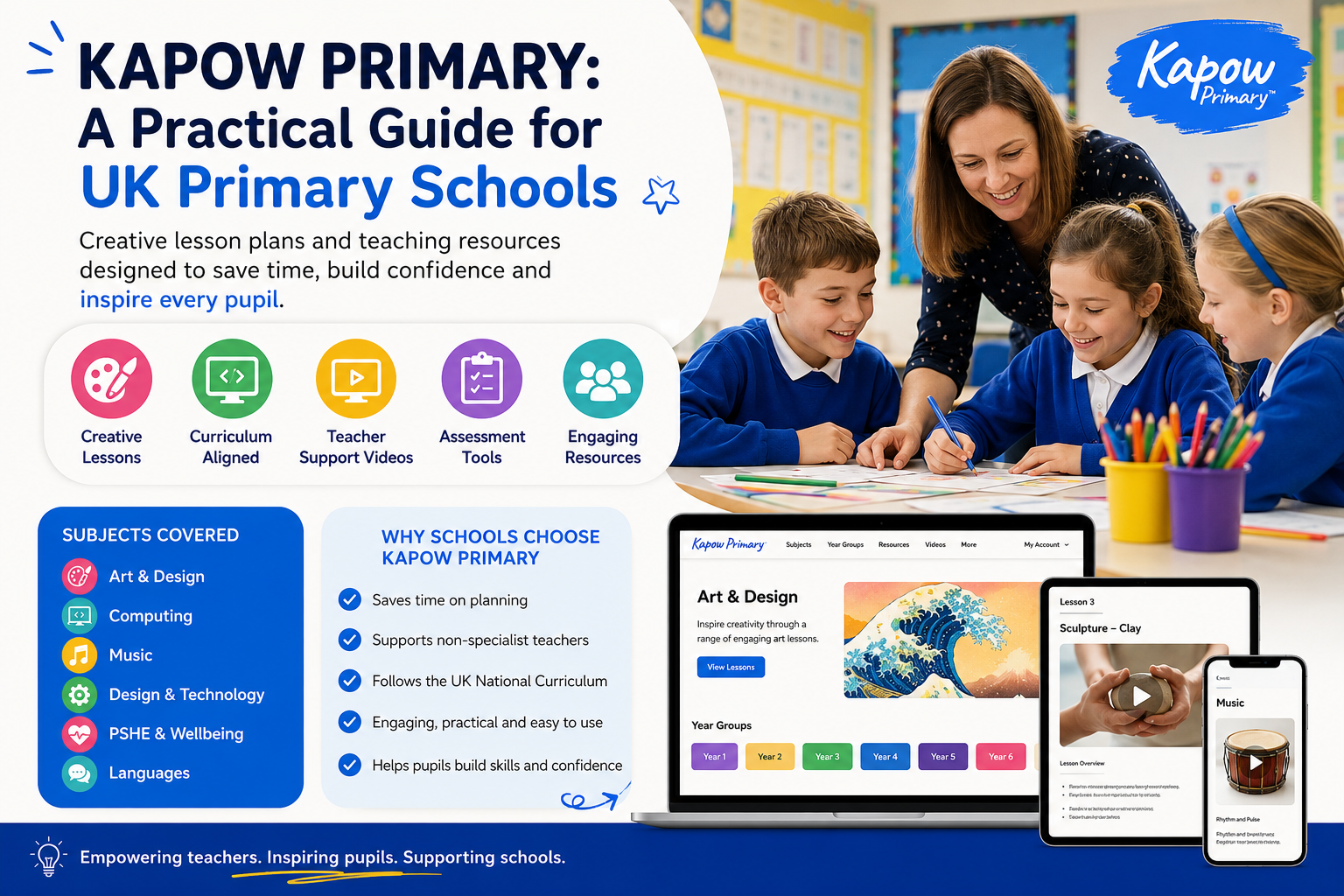
Kapow Primary is an online teaching and curriculum support platform designed for UK primary schools. It provides lesson plans, teaching videos, assessment tools, and classroom resources that align with the National Curriculum.
The platform focuses heavily on foundation subjects, including:
- Art and Design
- Computing
- Music
- Design and Technology
- PSHE
- Languages
Rather than replacing teachers, Kapow Primary aims to support them with structured guidance and ready-made teaching materials.
Schools often use the platform to:
- Reduce lesson planning time
- Improve consistency across year groups
- Support non-specialist teachers
- Deliver engaging classroom activities
- Ensure curriculum coverage
How Kapow Primary Works
Kapow Primary operates through a subscription-based online platform. Schools gain access to teaching materials that can be used directly in the classroom or adapted to suit individual teaching styles.
What Does the Platform Include?
The platform typically includes:
- Detailed lesson plans
- Presentation slides
- Demonstration videos
- Assessment opportunities
- Knowledge organisers
- Pupil activity sheets
- Teacher guidance
Everything is organised by subject and year group, making it easier for teachers to locate suitable resources quickly.
How Teachers Use Kapow Primary
A typical workflow may look like this:
- Choose a subject and year group
- Select a unit of work
- Review the lesson objectives
- Download or present teaching materials
- Deliver activities in class
- Use assessment tools to track progress
This structure helps schools maintain consistency while still allowing flexibility.
Subjects Covered by Kapow Primary
One reason many schools use Kapow Primary is the wide range of curriculum subjects available.
Art and Design
The art curriculum includes:
- Drawing techniques
- Sculpture projects
- Painting skills
- Artist studies
- Craft activities
Lessons often encourage creativity while teaching technical skills.
Computing
Computing resources cover:
- Coding basics
- Online safety
- Digital literacy
- Data handling
- Programming activities
These lessons help pupils develop essential digital skills from an early age.
Music
Kapow Primary music lessons introduce pupils to:
- Rhythm and pulse
- Singing
- Instruments
- Composition
- Musical appreciation
Teacher support videos can help non-specialists feel more confident.
Design and Technology
Design and technology lessons often involve:
- Food technology
- Structures
- Mechanisms
- Textiles
- Product design
Practical tasks encourage problem-solving and creativity.
PSHE and Wellbeing
Some schools use Kapow Primary resources to support:
- Emotional wellbeing
- Relationships education
- Personal development
- Social skills
This aligns with the increasing focus on mental health and wellbeing in schools.
Key Features of Kapow Primary
Curriculum-Aligned Resources
One of the strongest features of Kapow Primary is its alignment with the UK National Curriculum. This helps schools ensure pupils meet expected learning outcomes.
Ready-Made Lesson Plans
Teachers can save significant preparation time using detailed lesson plans that already include:
- Learning objectives
- Success criteria
- Activities
- Assessment suggestions
Teacher Videos
Many subjects include teacher guidance videos. These are especially useful for staff teaching outside their specialist area.
Assessment Support
Kapow Primary includes assessment tools that help teachers monitor understanding and progression.
Flexible Teaching Materials
Although lessons are structured, teachers can adapt resources to suit their pupils’ needs.
Benefits for Teachers and Schools
Saves Planning Time
One of the biggest advantages is reduced workload. Teachers spend less time creating resources from scratch.
Example
Instead of preparing an entire computing lesson independently, a teacher can access:
- Slides
- Activity instructions
- Demonstration videos
- Worksheets
This can save hours each week.
Improves Confidence
Non-specialist teachers often feel more comfortable teaching creative or technical subjects with structured guidance.
Encourages Consistency
Schools can create more consistent learning experiences across classes and year groups.
Supports Creative Learning
Many lessons encourage active participation and practical learning rather than passive memorisation.
Helps Curriculum Coverage
Kapow Primary makes it easier for schools to ensure all required topics are covered properly.
How Kapow Primary Supports the UK Curriculum
UK schools must follow curriculum expectations while balancing limited classroom time. Kapow Primary supports this by mapping lessons directly to curriculum objectives.
Curriculum Areas Supported
| Subject | Curriculum Support |
|---|---|
| Computing | Coding, digital literacy, online safety |
| Art | Creative techniques and artist studies |
| Music | Listening, performance, composition |
| DT | Designing, making, evaluating |
| PSHE | Personal development and wellbeing |
This alignment reduces uncertainty during curriculum planning.
Kapow Primary for Different Year Groups
Kapow Primary resources are organised by year group, helping teachers deliver age-appropriate learning.
Key Stage 1
Younger pupils often focus on:
- Basic creative skills
- Simple digital activities
- Introductory music concepts
- Hands-on exploration
Lessons are usually short, visual, and interactive.
Lower Key Stage 2
At this stage, pupils develop:
- Independent thinking
- Problem-solving skills
- Technical understanding
- Collaborative learning
Upper Key Stage 2
Older pupils may work on:
- Advanced coding
- Complex design projects
- Analytical thinking
- Creative independence
The progression structure supports long-term skill development.
Comparing Kapow Primary With Traditional Planning
Kapow Primary vs Manual Lesson Planning
| Feature | Kapow Primary | Traditional Planning |
|---|---|---|
| Preparation Time | Reduced | Higher |
| Curriculum Alignment | Built-in | Teacher-managed |
| Resource Availability | Extensive | Depends on teacher |
| Teacher Support | Included | Limited |
| Flexibility | Moderate | High |
Which Approach Is Better?
This depends on the school’s needs.
Kapow Primary is particularly useful for:
- Busy teachers
- Small schools
- Non-specialist teaching staff
- Schools wanting curriculum consistency
However, some teachers may still prefer creating completely personalised lessons.
Tips for Using Kapow Primary Effectively
Adapt Resources for Your Pupils
Even high-quality resources should be adjusted to meet individual classroom needs.
Combine With Practical Activities
Adding real-world activities can make lessons more memorable.
Example
A design technology lesson could include:
- Classroom demonstrations
- Group projects
- Local examples
- Hands-on materials
Encourage Discussion
Interactive discussion improves engagement and understanding.
Use Assessment Tools Regularly
Regular assessment helps identify learning gaps early.
Blend Digital and Traditional Teaching
Kapow Primary works best when combined with teacher creativity and classroom interaction.
Potential Drawbacks to Consider
While Kapow Primary offers many advantages, there are a few limitations schools should consider.
Subscription Costs
Schools need to budget for ongoing access.
Risk of Over-Reliance
Teachers should avoid depending entirely on pre-made lessons without adapting them.
Internet Access Requirements
Reliable internet access is important for smooth classroom use.
Different Teaching Styles
Not every resource will suit every classroom or teaching approach.
A balanced approach usually works best.
Is Kapow Primary Worth It?
For many UK primary schools, Kapow Primary provides a practical way to reduce workload while improving curriculum delivery.
It may be especially valuable for schools that:
- Need stronger curriculum structure
- Want consistent lesson quality
- Support non-specialist staff
- Need time-saving resources
However, success still depends on effective teaching, classroom management, and adapting lessons to pupils’ needs.
Kapow Primary works best as a support tool rather than a replacement for professional teaching expertise.
Conclusion
Kapow Primary has become a popular educational resource for UK primary schools because it combines structured curriculum support with engaging teaching materials. By helping teachers save time, improve confidence, and deliver creative lessons, the platform supports both staff and pupils in meaningful ways.
Its curriculum-aligned resources, flexible lesson plans, and subject variety make it useful across different year groups and teaching environments. While no platform can replace the value of experienced teachers, Kapow Primary can make lesson planning more manageable and classroom learning more engaging.
For schools looking to strengthen foundation subjects while reducing workload pressures, Kapow Primary is a practical option worth exploring.