










What Is an MOT History?
An MOT history is a record of every MOT inspection completed on a vehicle throughout its life.
The MOT test is a legal requirement for most vehicles over three years old in the UK. The purpose of the test is to ensure that vehicles meet minimum safety and environmental standards before being allowed on public roads.
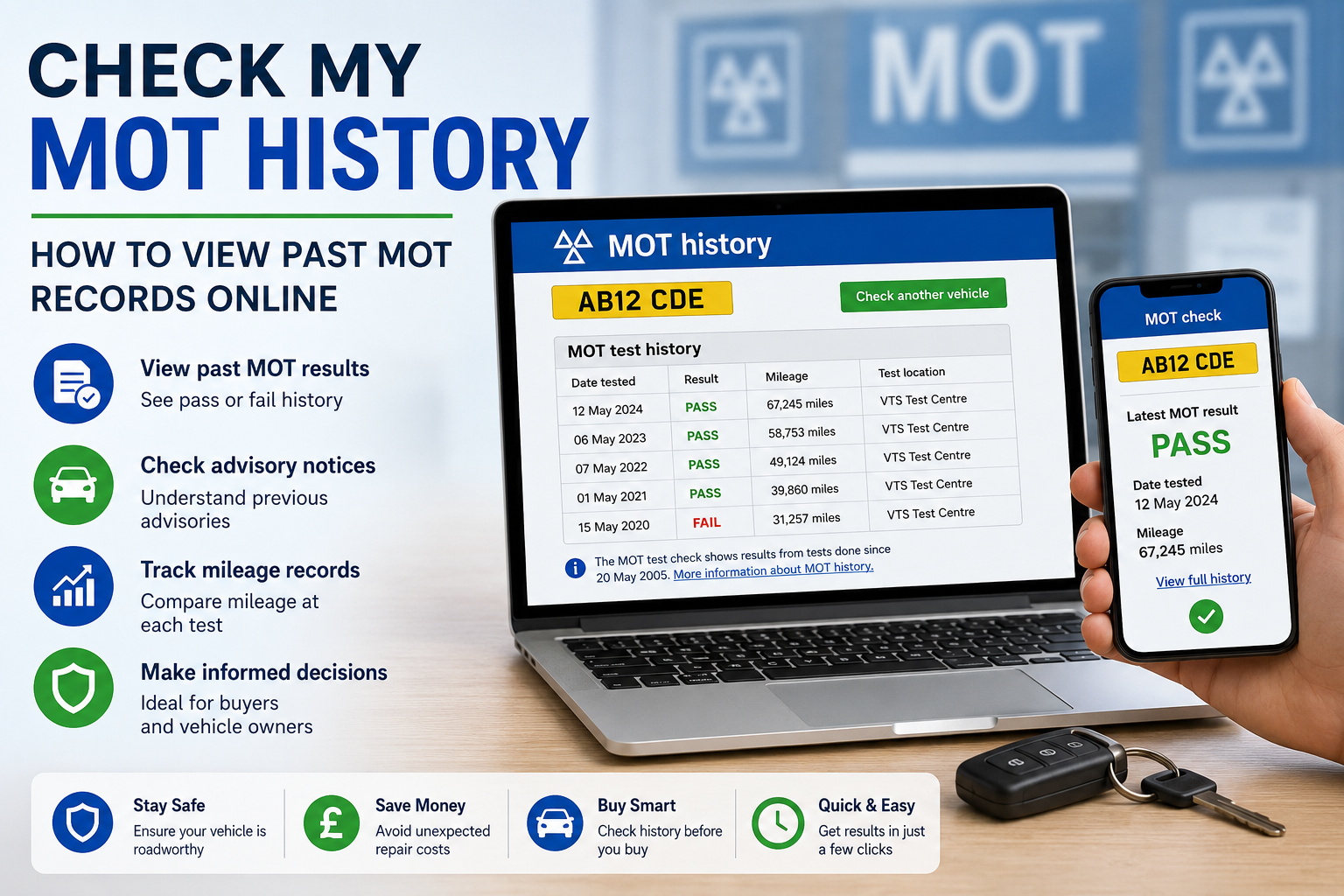
The MOT test history contains valuable information, including:
- Test dates
- Pass and fail results
- Mileage readings
- Advisory notices
- Defect reports
- Repair recommendations
Reviewing DVSA MOT records can help drivers understand a vehicle’s condition over time.
Why Should You Check My MOT History?
There are several reasons why drivers choose to check my MOT history regularly.
Better Maintenance Planning
A detailed MOT history check helps identify recurring issues that may require attention.
For example, if brake wear appears repeatedly in reports, you can plan repairs before the next inspection.
Improved Road Safety
Previous inspections often reveal safety-related concerns.
Reviewing vehicle maintenance history can help prevent breakdowns and accidents.
Smarter Vehicle Purchases
Before buying a used car, examining the used car MOT history can provide a clearer picture of how well the vehicle has been maintained.
How to View Past MOT Records Online
Checking MOT records online is a simple process.
Most services require only a vehicle registration number.
Using an online MOT checker, drivers can quickly access historical records and inspection results.
Step-by-Step Guide
Step 1: Enter the Registration Number
Input the vehicle registration into the search system.
Step 2: Verify Vehicle Details
Confirm the make, model, and fuel type.
Step 3: Review MOT Results
The system will display:
- Previous MOT outcomes
- Advisory notices
- Mileage history
- Failure records
Step 4: Analyse the Information
Look for recurring defects or unusual mileage patterns.
A complete MOT history check takes only a few minutes but can reveal valuable information.
What Information Is Included in MOT Records?
Understanding what appears in MOT records helps drivers make informed decisions.
Test Dates
Every MOT inspection is recorded with the exact date it took place.
This helps verify that a vehicle has been tested regularly.
Mileage Readings
MOT mileage records are collected during every inspection.
These readings help verify:
- Vehicle usage
- Wear and tear
- Mileage consistency
Pass Results
A pass indicates that the vehicle met legal safety requirements at the time of testing.
Failure Results
Detailed MOT failure records explain why a vehicle did not pass inspection.
Common reasons include:
- Worn tyres
- Faulty brakes
- Broken lights
- Suspension issues
- Emissions failures
Advisory Notices
A complete MOT advisory history highlights components that may require attention in the future.
Although advisories do not cause failure, they should never be ignored.
Understanding MOT Test Results
When reviewing MOT records, it’s important to understand what the outcomes mean.
Pass
A pass means the vehicle met minimum legal standards.
The vehicle is considered roadworthy at the time of testing.
Pass with Advisories
The vehicle passed but inspectors identified items that may require future maintenance.
Reviewing MOT advisory history can help drivers budget for upcoming repairs.
Fail
A failed inspection means defects were found that require repair before the vehicle can pass a retest.
Studying MOT pass and fail history can reveal long-term maintenance trends.
MOT Advisories Explained
Many vehicle owners overlook advisories because they do not cause an immediate failure.
However, advisories often provide early warnings about developing problems.
Common Advisory Items
Tyres
- Tread approaching legal limits
- Uneven wear patterns
Brakes
- Worn pads
- Brake disc deterioration
Suspension
- Worn joints
- Minor component wear
Corrosion
- Surface rust
- Structural deterioration
A growing MOT advisory history may indicate future repair costs.
Why MOT History Matters When Buying a Used Car
Purchasing a second-hand vehicle involves risk.
The used car MOT history provides transparency and can reveal issues that may not be obvious during a visual inspection.
Identify Recurring Problems
Repeated failures often suggest unresolved issues.
Examples include:
- Brake defects
- Suspension wear
- Steering faults
- Emissions problems
Verify Mileage
Comparing MOT mileage records helps identify inconsistencies.
Large unexplained changes should be investigated further.
Assess Ownership Quality
A vehicle with consistent MOT passes and few advisories often reflects responsible maintenance.
Combining a vehicle history check with MOT information gives buyers greater confidence.
Common Problems Found in MOT Reports
Many vehicles fail MOT inspections for similar reasons.
Tyres
Tyres remain one of the most common causes of MOT failure.
Common issues include:
- Insufficient tread depth
- Sidewall damage
- Uneven wear
Brakes
Brake-related defects frequently appear in MOT failure records.
These may include:
- Worn pads
- Corroded brake pipes
- Reduced braking efficiency
Lighting Systems
Lighting faults are simple but common causes of failure.
Examples include:
- Faulty indicators
- Broken bulbs
- Misaligned headlights
Suspension Components
Suspension wear occurs naturally over time.
Inspectors often identify:
- Damaged springs
- Worn shock absorbers
- Excessive joint movement
Emissions Problems
Vehicles must meet environmental standards during every annual MOT test.
Excessive emissions can result in immediate failure.
MOT History vs Service History
Many motorists assume MOT records and service records are the same.
They are actually very different.
| MOT History | Service History |
|---|---|
| Government inspection record | Garage maintenance record |
| Shows pass and fail outcomes | Shows repairs completed |
| Includes advisories | Includes servicing work |
| Focuses on legal compliance | Focuses on vehicle care |
| Updated annually | Updated whenever serviced |
Reviewing both vehicle MOT records and service records provides the most complete picture of a vehicle’s condition.
Benefits of Regular MOT History Checks
Checking MOT history regularly offers several advantages.
Improved Reliability
Monitoring vehicle maintenance history helps identify problems before they become serious.
Better Budget Planning
Knowing what repairs may be required allows owners to prepare financially.
Increased Resale Value
Vehicles with strong MOT records are often more attractive to buyers.
Safer Driving
Regular reviews of the UK MOT database help owners address safety concerns quickly.
Tips for Passing Your Next MOT Test
Preparation can significantly improve your chances of passing.
Inspect Tyres
Check for:
- Legal tread depth
- Correct pressure
- Visible damage
Test All Lights
Ensure all lighting systems function correctly.
Check Fluid Levels
Verify adequate levels of:
- Engine oil
- Coolant
- Brake fluid
- Washer fluid
Review Previous Reports
Your MOT test history often highlights recurring issues that should be addressed before the next inspection.
Listen for Unusual Noises
Suspension or brake noises may indicate problems requiring attention.
Conclusion
Learning how to check my MOT history is one of the most effective ways to become a more informed vehicle owner.
A detailed MOT history check provides valuable information about previous inspections, advisory notices, mileage readings, and repair needs. Whether you’re reviewing vehicle MOT records for your own car or researching a used vehicle, MOT data can help you make smarter decisions.
By examining MOT pass and fail history, monitoring MOT mileage records, and reviewing MOT advisory history, drivers can improve vehicle reliability, enhance safety, and avoid costly surprises.
Regular use of an online MOT checker remains one of the simplest and most valuable tools available to UK motorists.