









Understanding Weather Belfast
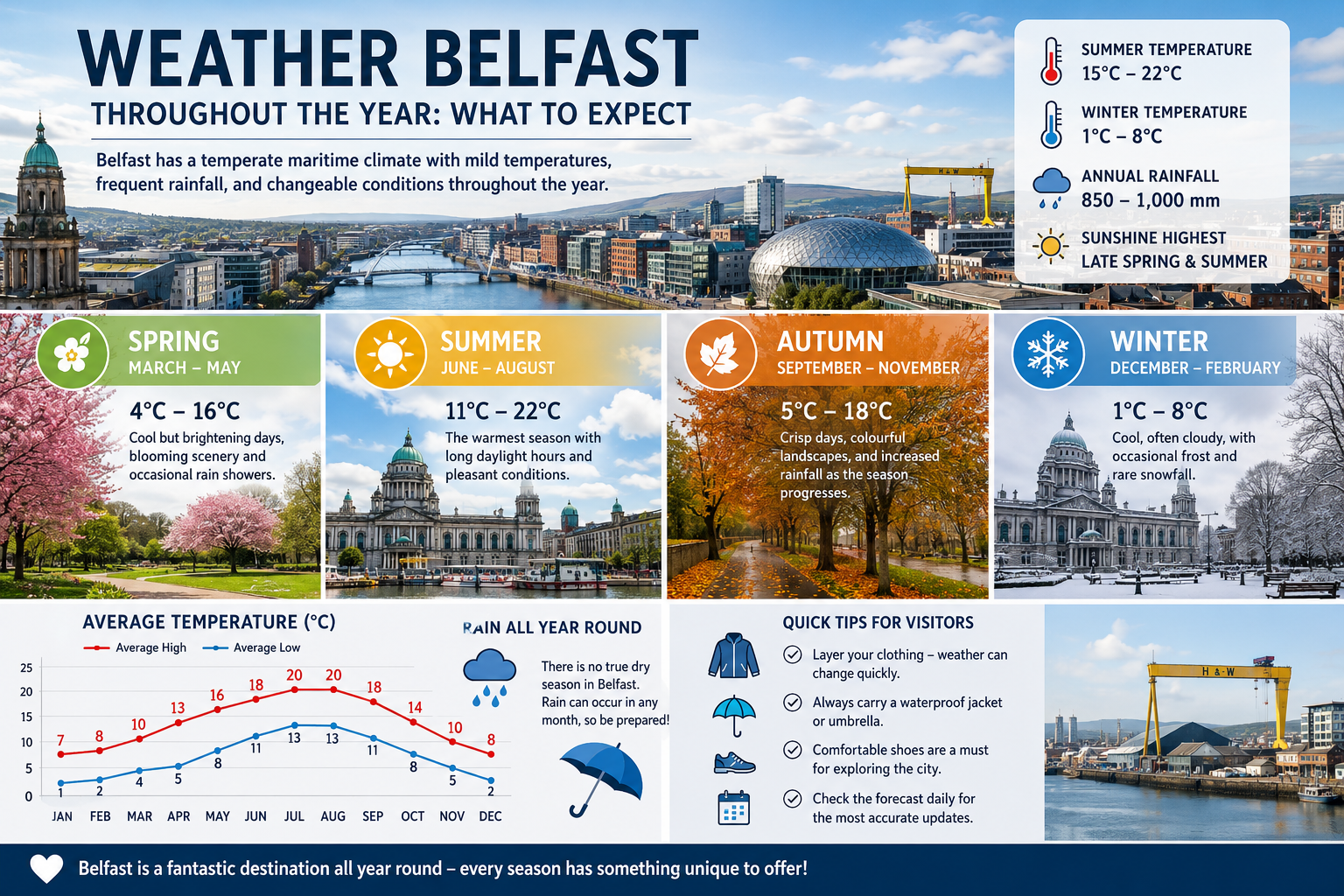
Belfast experiences a temperate oceanic climate influenced heavily by the Atlantic Ocean. This creates moderate temperatures throughout the year and prevents both extreme heat and severe cold.
Key characteristics of weather Belfast include:
- Mild summers
- Cool winters
- Frequent rainfall
- Moderate humidity
- Occasional strong winds
- Variable daily conditions
One common saying among locals is that you can experience four seasons in a single day. While this may sound exaggerated, sudden changes in weather are not unusual.
Belfast Climate Overview
The city’s climate is largely shaped by its coastal location.
Quick Climate Facts
| Climate Feature | Typical Range |
|---|---|
| Summer Temperature | 15°C–22°C |
| Winter Temperature | 1°C–8°C |
| Annual Rainfall | 850–1,000 mm |
| Snowfall | Occasional |
| Sunshine Hours | Higher in late spring and summer |
| Wettest Months | Usually autumn and winter |
The climate remains relatively stable compared with many European cities.
Weather Belfast in Spring
March to May
Spring marks the transition from cooler winter days to warmer and brighter conditions.
Temperatures gradually increase during this period, and daylight hours become noticeably longer.
Average Spring Temperatures
- March: 4°C–10°C
- April: 5°C–13°C
- May: 8°C–16°C
What Spring Feels Like
Spring in Belfast can be unpredictable. One day may bring sunshine and blue skies, while the next may include showers and strong winds.
Visitors often enjoy:
- Blooming parks and gardens
- Comfortable sightseeing conditions
- Fewer tourist crowds
- Increasing daylight
Activities to Enjoy
Some popular spring activities include:
- Walking through Botanic Gardens
- Exploring Cave Hill
- Visiting Belfast Castle
- Discovering local markets
Spring is often considered one of the most pleasant times to experience Belfast.
Weather Belfast in Summer
June to August
Summer is the warmest season in Belfast and attracts the highest number of visitors.
Unlike southern European destinations, Belfast rarely experiences excessive heat, making it ideal for outdoor exploration.
Average Summer Temperatures
- June: 11°C–18°C
- July: 13°C–20°C
- August: 13°C–20°C
Occasionally temperatures can exceed 22°C, but heatwaves remain relatively uncommon.
What Summer Feels Like
Residents enjoy:
- Long daylight hours
- Milder evenings
- Comfortable outdoor temperatures
- More sunshine
Rain can still occur, so carrying a lightweight waterproof jacket remains a good idea.
Best Summer Activities
Summer is ideal for:
- City walking tours
- Coastal day trips
- Outdoor festivals
- Exploring Titanic Quarter
- Visiting nearby beaches
Is Summer the Best Time to Visit Belfast?
For many travellers, the answer is yes.
Benefits include:
- Better weather conditions
- Longer days
- More outdoor events
- Easier sightseeing opportunities
However, accommodation prices may be slightly higher during peak tourist periods.
Weather Belfast in Autumn
September to November
Autumn brings cooler temperatures and colourful landscapes across Belfast and surrounding areas.
Average Autumn Temperatures
- September: 11°C–18°C
- October: 8°C–14°C
- November: 5°C–10°C
What Autumn Feels Like
Autumn weather often includes:
- Crisp mornings
- Colourful foliage
- Increased rainfall
- Shorter daylight hours
The city’s parks become particularly attractive during this season.
Advantages of Visiting in Autumn
Many visitors appreciate:
- Smaller crowds
- Lower accommodation costs
- Beautiful scenery
- Comfortable walking conditions
Rain becomes more frequent as the season progresses, particularly during October and November.
Weather Belfast in Winter
December to February
Winter in Belfast is relatively mild compared with many parts of Europe.
Average Winter Temperatures
- December: 2°C–8°C
- January: 1°C–7°C
- February: 2°C–8°C
Does Belfast Get Snow?
Snow is possible but generally not excessive.
When snowfall occurs, it is often:
- Light
- Temporary
- More common on higher ground
Many winters pass with only limited snow accumulation.
What Winter Feels Like
Winter weather typically includes:
- Cool temperatures
- Frequent cloud cover
- Rain showers
- Occasional frost
Despite shorter days, Belfast remains lively during the festive season.
Winter Activities
Popular winter attractions include:
- Christmas markets
- Museums
- Historic tours
- Indoor cultural events
- Shopping districts
Average Temperature and Rainfall Throughout the Year
Understanding average conditions can help travellers prepare effectively.
| Month | Avg High °C | Avg Low °C |
| January | 7 | 1 |
| February | 8 | 2 |
| March | 10 | 4 |
| April | 13 | 5 |
| May | 16 | 8 |
| June | 18 | 11 |
| July | 20 | 13 |
| August | 20 | 13 |
| September | 18 | 11 |
| October | 14 | 8 |
| November | 10 | 5 |
| December | 8 | 2 |
Rainfall occurs throughout the year, meaning there is no true dry season.
Does It Rain Every Day in Belfast?
Not at all.
Although Belfast has a reputation for rain, many showers are brief and followed by clearer conditions.
Visitors often discover that forecasts showing rain do not necessarily mean all-day wet weather.
What Is the Best Time to Visit Belfast?
The ideal time depends on your priorities.
For Pleasant Weather
Choose:
- May
- June
- July
- August
These months offer the warmest temperatures and longest daylight hours.
For Budget Travellers
Consider:
- March
- April
- October
- November
Accommodation rates may be more affordable.
For Photography
Many photographers prefer:
- Spring blossoms
- Autumn colours
- Clear summer evenings
Each season offers unique opportunities.
What Should You Pack for Weather Belfast?
Preparation is key because weather conditions can change quickly.
Essential Items
Regardless of season, consider bringing:
- Waterproof jacket
- Comfortable walking shoes
- Umbrella
- Layered clothing
- Warm jumper
- Day backpack
Summer Packing Tips
Include:
- Light clothing
- Sunglasses
- Light raincoat
Winter Packing Tips
Bring:
- Warm coat
- Gloves
- Scarf
- Waterproof footwear
Layering remains the most effective strategy year-round.
Weather Belfast Compared to Other UK Cities
Many people wonder how Belfast compares with other destinations in the United Kingdom.
| City | Summer Avg °C | Winter Avg °C | Rainfall |
| Belfast | 20 | 7 | Moderate |
| London | 24 | 8 | Lower |
| Manchester | 21 | 6 | Higher |
| Edinburgh | 19 | 6 | Similar |
| Cardiff | 22 | 7 | Moderate |
Belfast generally experiences:
- Cooler summers than London
- Similar winters to Edinburgh
- Less extreme temperature variations
This makes the city comfortable for year-round travel.
How Accurate Are Weather Belfast Forecasts?
Modern forecasting technology has significantly improved weather predictions.
For the best results:
- Check forecasts daily
- Review hourly updates
- Prepare for sudden changes
- Keep waterproof clothing available
Short-term forecasts are generally reliable, while longer-range forecasts may vary.
Conclusion
Understanding weather Belfast throughout the year allows visitors and residents to plan more effectively and enjoy everything the city has to offer.
Belfast’s temperate maritime climate creates relatively mild conditions in every season. Summers are comfortable without extreme heat, winters are cool rather than harsh, and spring and autumn provide beautiful scenery and enjoyable temperatures.
While rainfall can occur at any time of year, it rarely prevents exploration. With appropriate clothing, flexible plans, and a good understanding of seasonal patterns, you can enjoy Belfast regardless of the forecast.
Whether you’re visiting for a weekend city break, considering relocation, or simply researching Northern Ireland’s climate, Belfast offers a welcoming environment throughout all four seasons.